How Long Does a Home Inspection Take?
A home inspection typically takes 2–4 hours, depending on the home's size, age, and condition. Mile High Home Inspection usually provides a detailed inspection report within 24 hours.
Knowing the expected timeline helps you plan your schedule and prepare for the next steps in your home-buying process. During the inspection, the inspector checks major systems and accessible areas for visible issues that may need attention.
How Long Does a Home Inspection Usually Take?
The average home inspection time depends on the property's size, age, condition, and layout. Here are some general estimates to help you plan your appointment.
| Property type | Approximate size | Estimated inspection time |
|---|---|---|
| Small condo or townhouse | 800–1,200 sq. ft. | 1–1.5 hours |
| Standard single-family home | 1,500–2,500 sq. ft. | 2–3 hours |
| Larger single-family home | 2,500–3,500 sq. ft. | 3–4 hours |
| Large or complex property | 3,500+ sq. ft. | 4–6+ hours |
These times are estimates and may vary depending on the property's condition, layout, and accessibility. Ask your home inspector for an estimate based on your property.
What Factors Affect Home Inspection Time?
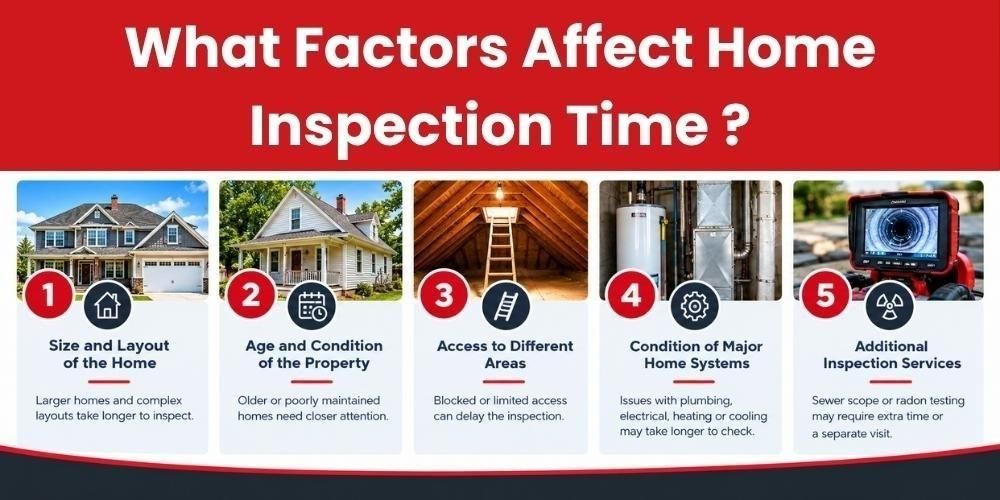
Several factors can affect how long a home inspection takes, including the property's size, condition, accessibility, and the systems being inspected.
1. Size and Layout of the Home
Larger homes with multiple floors, finished basements, garages, or several HVAC systems generally take longer to inspect than smaller properties.
2. Age and Condition of the Property
Older or poorly maintained homes may have visible damage, worn components, or previous repairs that require closer attention and additional documentation.
3. Access to Different Areas
Inspectors need safe access to areas such as the attic, basement, crawl space, electrical panel, and HVAC equipment. Blocked or inaccessible areas may delay the inspection or limit what can be checked.
4. Condition of Major Home Systems
Visible concerns involving plumbing, electrical, heating, cooling, or structural components may require additional documentation. More complex systems can also increase inspection time.
5. Additional Inspection Services
Services such as sewer scope inspections and radon testing may require extra appointment time or a separate testing period. Ask your inspection company which services can be completed during the same visit.
What the Inspector Actually Checks
During a home inspection, the inspector checks accessible areas of the property for visible defects.
Outside the House:
- Roof and roofing materials
- Gutters and drainage
- Foundation and exterior grading
- Siding, windows, and exterior doors
Inside the House:
- Electrical panel, outlets, and switches
- Faucets, toilets, and visible plumbing
- Heating and cooling systems
- Built-in appliances, where included in the inspection
Structural and Other Areas:
- Attic insulation and ventilation
- Basement or crawl space
- Walls, ceilings, and floors
- Windows, stairs, and railings
Inspectors take photos and notes to document their findings, which are included in the inspection report.
What Happens During a Home Inspection?

A home inspection involves examining accessible components of a property for visible defects, safety concerns, and maintenance issues. The inspector documents the findings to help you understand the home's condition and identify areas that may need attention.
Here are the main areas typically covered during a standard home inspection.
| Area | What the Inspector Checks |
|---|---|
| Roof and exterior | Visible roof damage, siding, windows, doors, and drainage |
| Foundation and structure | Visible cracks, signs of movement, and moisture concerns |
| Plumbing | Accessible pipes, fixtures, drainage, and visible leaks |
| Electrical | Accessible electrical panels, outlets, switches, and visible defects |
| Heating and cooling | Accessible HVAC equipment and apparent operating issues |
| Interior | Walls, ceilings, floors, windows, and doors |
| Attic and crawl space | Accessible areas for moisture, ventilation, and insulation concerns |
The inspection focuses on visible and accessible conditions. If an area cannot be safely accessed, the inspector may be unable to evaluate it fully. A home inspection is also not a guarantee that every defect will be identified.
How Can You Prepare for a Home Inspection?
Preparing the property before the appointment can help the inspection proceed more smoothly. Although preparation cannot eliminate every delay, it can reduce access problems and make it easier for the inspector to examine the areas included in the inspection.
Here are some practical steps to consider before inspection day.
- Clear access to key equipment: Move stored items away from the electrical panel, water heater, HVAC equipment, and other components that need to be examined.
- Arrange access to restricted areas: Make sure the inspector can enter the attic, basement, crawl space, garage, or other included areas where access is available.
- Share known concerns: Tell the inspector about known leaks, recurring drainage problems, or other issues that may deserve attention during the inspection.
- Provide relevant information: If available, make records of recent repairs or equipment maintenance accessible. These records can provide useful background but do not replace the inspection.
- Keep the schedule flexible: Allow time for the inspection and a discussion of findings rather than scheduling another commitment immediately afterward.
Do not attempt to make an unsafe area accessible yourself. If an area presents a safety concern, discuss it with the inspection company so the limitation can be handled appropriately.
Preparation helps the appointment run more efficiently, but the inspection should never be rushed simply to meet a planned finishing time.
Should You Attend the Home Inspection?
If possible, attending the home inspection is a good idea. You can see the findings firsthand, ask the inspector questions, and better understand the property's condition.
Walking through the home with the inspector can also help you learn about maintenance needs, the location of important systems, and any areas that may require repairs or further evaluation.
If you cannot attend the entire inspection, ask whether you can join for the final walkthrough or discuss the main findings with your inspector afterward. The inspection report will provide a written record of the observations and any recommended follow-up.
How Long Does It Take to Receive a Home Inspection Report?
After the inspection, the inspector reviews the findings, adds relevant photos, and prepares the report. Turnaround times vary depending on the property and the inspection company.
Mile High Home Inspection typically provides reports within 24 hours of the inspection.
When reviewing your report, focus on:
- Major issues: Check for safety concerns and significant defects.
- Repairs: Note items that may need fixing.
- Maintenance: Review recommendations for ongoing home care.
- Further evaluation: Check whether a specialist's assessment is recommended.
The report helps you understand the property's condition and plan your next steps. If you are buying a home, review it promptly so you have time to discuss concerns and arrange any necessary follow-up before your contractual deadlines.
Frequently Asked Questions
1. How Long Does a Home Inspection Take for a 2,000-Square-Foot House?
A home inspection for a 2,000-square-foot house typically takes around 2–4 hours, depending on its age, condition, layout, and accessibility.
2. Can a Home Inspection Take More Than Four Hours?
Yes. Larger or older homes, complex systems, limited access, and additional inspection services can extend the appointment.
3. Do Home Inspectors Check Every Room?
Inspectors examine accessible rooms and major components, including walls, ceilings, floors, windows, doors, and electrical fixtures. The inspection focuses on visible conditions rather than cosmetic details.
4. Can Bad Weather Delay a Home Inspection?
Yes. Heavy rain, snow, or ice may limit access to the roof and other exterior areas. Unsafe conditions can prevent certain parts of the inspection from being completed.
5. How Long After a Home Inspection Will I Receive the Report?
Mile High Home Inspection typically provides the report within 24 hours of the inspection. Review it promptly to allow time for any necessary follow-up before your purchase-agreement deadlines.
Final Thoughts
A home inspection helps you understand a property's condition before making a purchase. Knowing what to expect during the inspection and reviewing the report carefully can help you identify potential concerns and plan your next steps.
Mile High Home Inspection provides professional home inspection services in Fort Collins, Loveland, and Colorado's Front Range. Visit our
Standard Home Inspection page to learn more and schedule your inspection with confidence.